
Wisdom Tooth Extraction
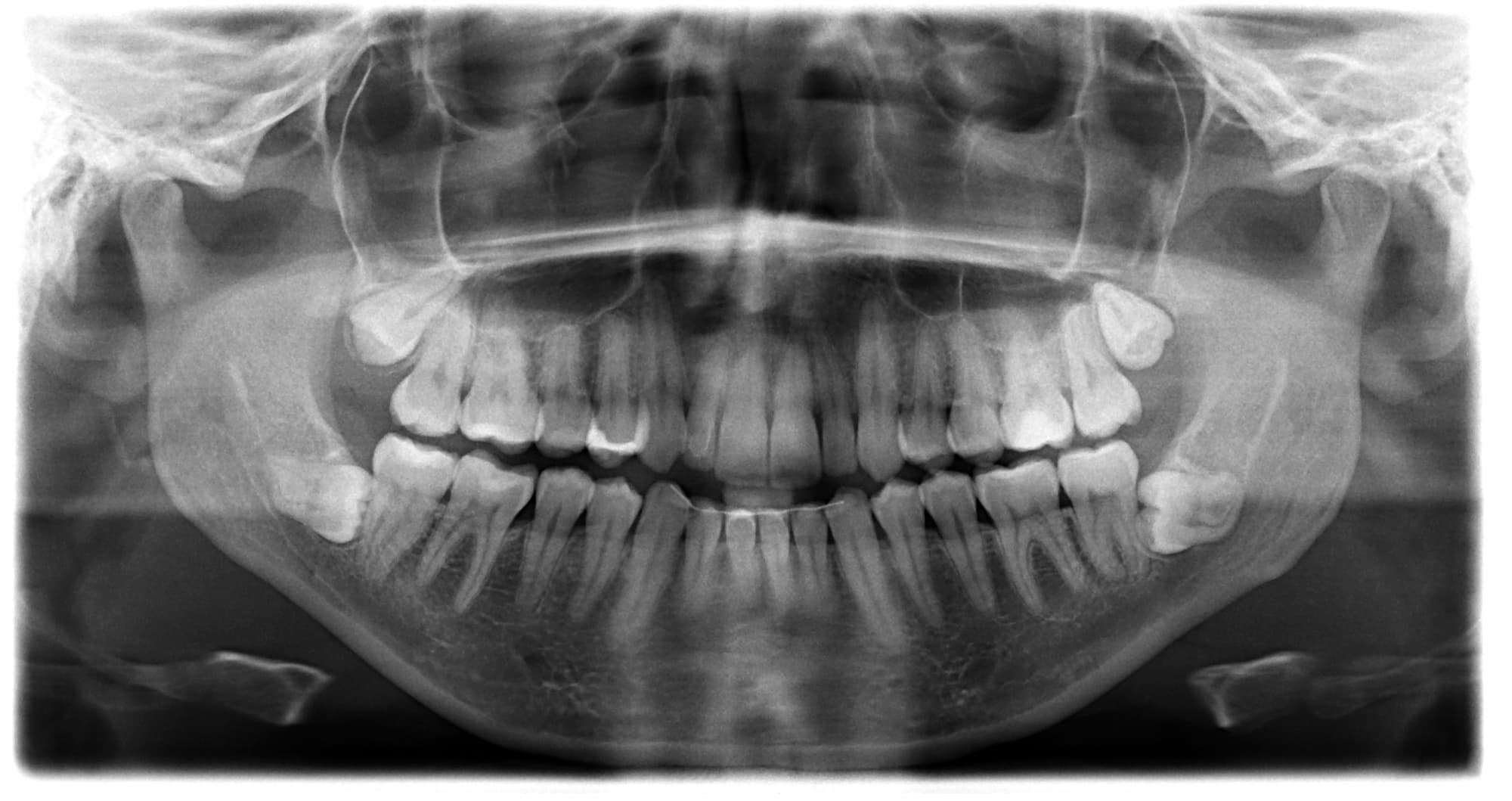
What are wisdom teeth?
Wisdom teeth, also known as third molars, are the last permanent teeth to erupt in the mouth, usually between the ages of 18 and 25. They are located at the very back of each dental quadrant, behind the second molars.
Like other molars, they are used to grind food, but their functional role is often limited, especially if they are not fully aligned. Some people do not have any, while others may have one, two, three, or four. Their growth can be problematic if there is insufficient space in the jaw, which can lead to:
- Impacted teeth (teeth that do not fully erupt)
- Pain or discomfort
- Risk of cavities or gum disease in adjacent teeth
Dentists often recommend an X-ray examination between the ages of 15 and 16 to identify any potential problems and determine whether extraction will be necessary.
Wisdom teeth may need to be extracted for several reasons:
Lack of space
If the jaw is too small, wisdom teeth may grow crooked or remain impacted, which can cause pain and displace other teeth.
Misalignment
Teeth may erupt at an angle, horizontally, or become wedged against other teeth, making oral hygiene difficult and increasing the risk of infection.
Pain or discomfort
Wisdom teeth can cause localized pain, swelling, or gum irritation.
Infections or inflammation
A partially erupted tooth can create a space where bacteria thrive, leading to infections, abscesses, or gum inflammation (pericoronitis).
Tooth Decay and Tooth Damage
The awkward position of wisdom teeth makes brushing and cleaning more difficult, increasing the risk of decay on the wisdom teeth themselves or on adjacent teeth.