
Dental Exam and Cleaning

What is a dental cleaning (prophylaxis)?
For your first dental appointment, it’s a good idea to arrive a few minutes early to get ready. The dental hygienist performs a complete cleaning of your teeth, known as prophylaxis, which includes removing plaque and tartar, polishing your teeth, and providing personalized advice on oral hygiene. These procedures are performed independently by the hygienist, who has the necessary training and certification.

What Is a Dental Exam?
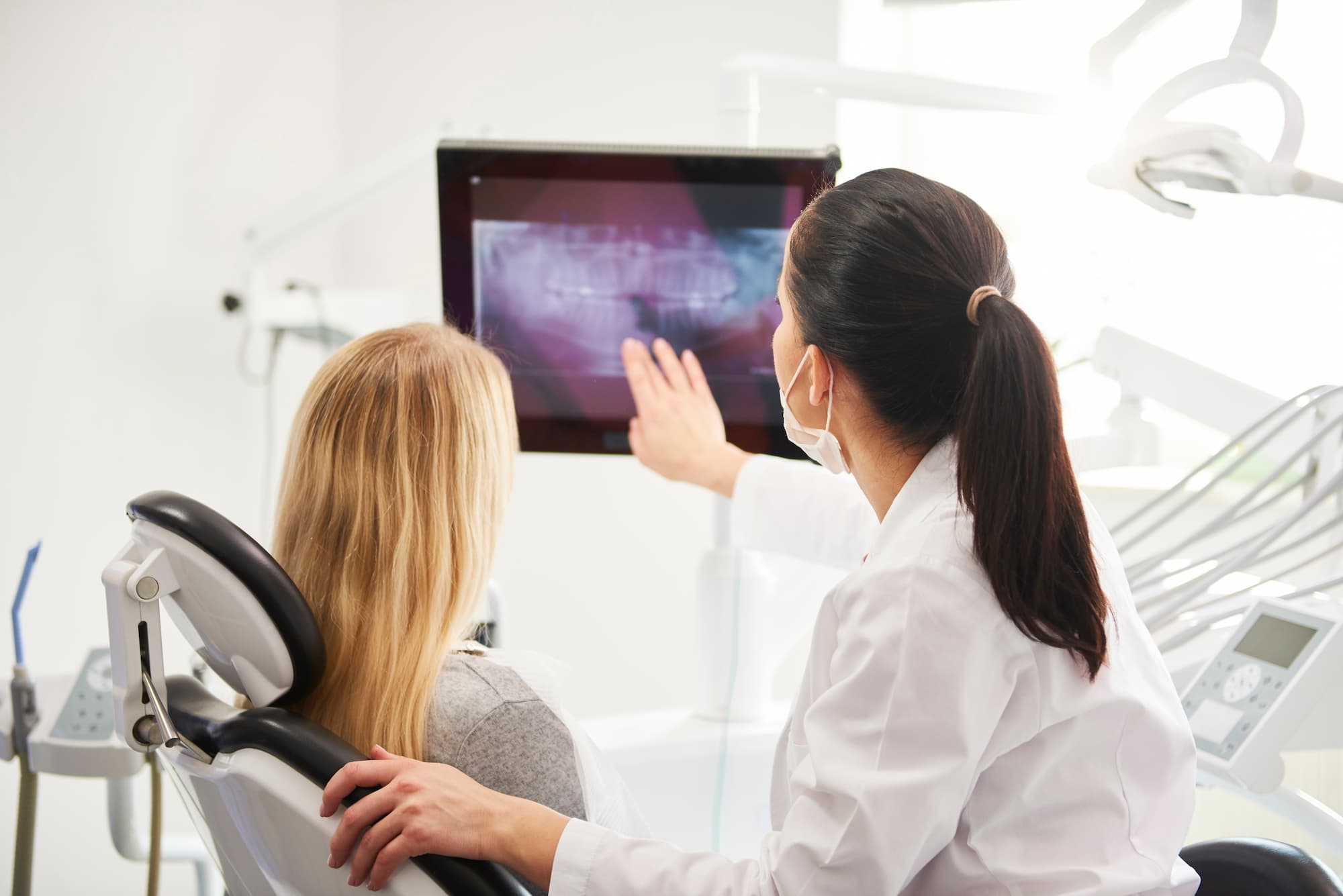
A dental exam allows the dentist to assess the condition of your teeth, gums, and oral tissues. It helps detect problems early and prevent more serious complications.
The dentist can identify, among other things:
- tooth decay and cracks
- gum inflammation or disease
- tooth wear
- changes in tooth alignment
- lesions or abnormalities in the oral tissues
The cleaning performed by the dental hygienist complements this exam, as it removes tartar and plaque, polishes the teeth, and improves oral hygiene between visits.
How often should you schedule an appointment?
For most patients, a checkup and cleaning twice a year are recommended. This routine allows us to monitor the progress of your oral health and take prompt action if a problem arises.
The frequency may vary depending on your oral and overall health. Some patients may need more frequent visits (every 4 to 9 months), while others in excellent health may sometimes space out their visits to once a year—always based on their dentist’s advice.
Why are these visits important?
These appointments help prevent problems before they become serious and make treatment easier if an issue is detected. Detecting problems early—such as cavities or gum inflammation—makes treatment easier and protects your smile in the long run.
Tell Your Dentist About Any Changes
Your appointment is also an opportunity to let your dentist know about any changes since your last visit. These may include:
- sensitivity in your teeth or gums
- bleeding while brushing or flossing
- pain or discomfort
- changes in the color or position of your teethgeneral health issues, new medications, allergies,
- pregnancy, or lifestyle habits (such as smoking)
This information allows your dentist to tailor your care and recommendations so that your visits are as effective as possible.