
Implantology
What is Implantology?
Dental implantology is a specialized branch of dentistry that focuses on replacing missing teeth with implants. Two main materials are used: ceramic and titanium. Thanks to current technologies, this approach offers a reliable and long-lasting option for replacing one or more missing teeth.
- Placement of ceramic implants (single or multiple)
- Placement of titanium implants (single or multiple)
Replacing one or more missing teeth with a dental implant.
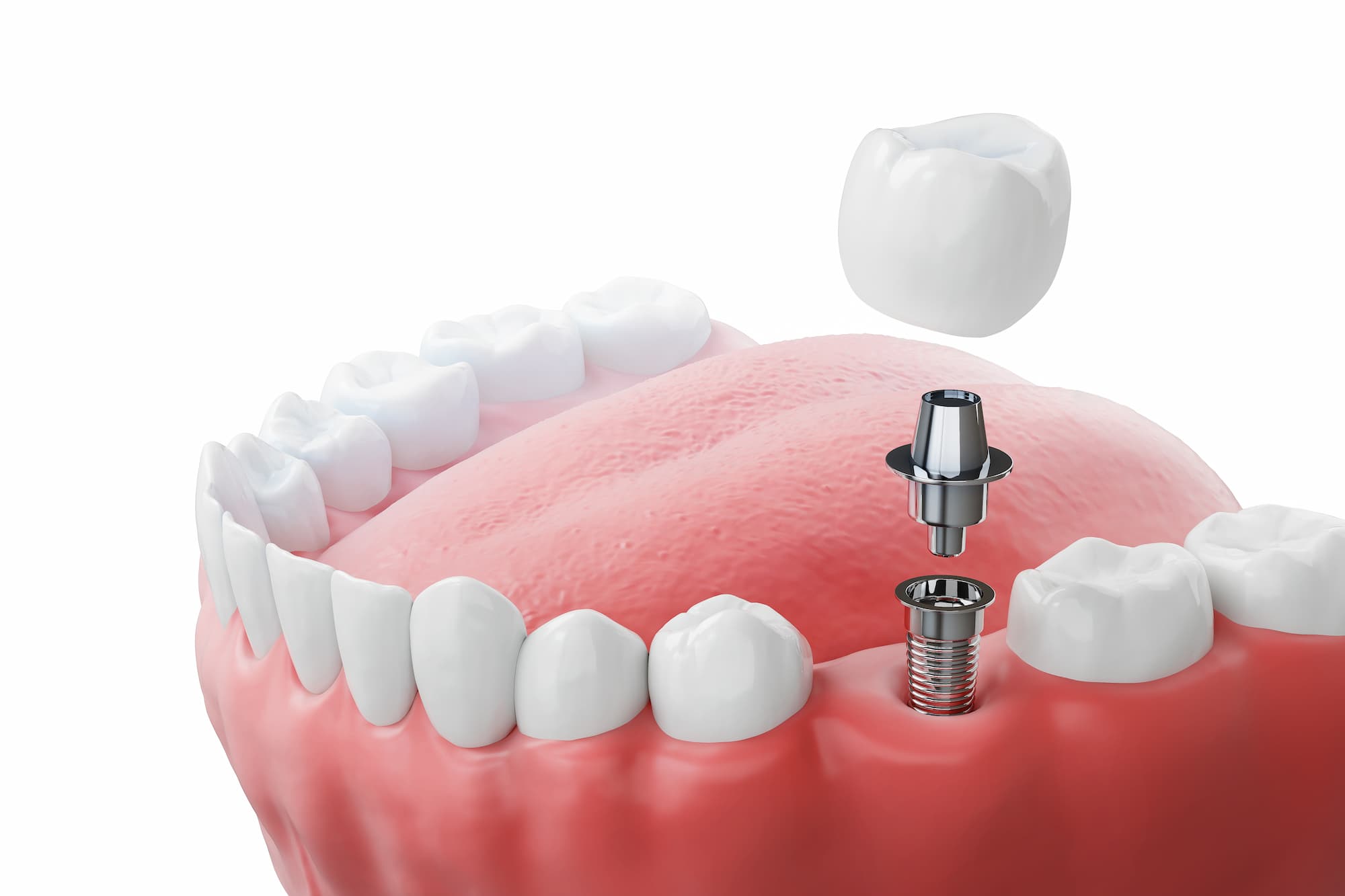
Dental implants are a good treatment option when one or more teeth are missing. The implant itself does not directly replace the natural tooth: after it has integrated into the jawbone, an abutment is attached to it to serve as the foundation for the final restoration.
Depending on the case, a crown, bridge, or denture may then be placed on this abutment. For a single missing tooth, a single crown is generally sufficient. When multiple teeth are missing, various solutions can be considered, such as a bridge, a denture, or multiple implants with single crowns.
The choice depends on the patient’s needs and the dentist’s recommendations, based on the established treatment plan.
A procedure performed in a dental clinic under local anesthesia
The placement of dental implants is a surgical procedure generally performed in a dental clinic under local anesthesia.
Several oral health professionals can perform implant placement, including certain dental surgeons, oral and maxillofacial surgeons, periodontists, and other specialists trained in implantology. Advanced training in implant surgery is required to perform this type of procedure.
The fabrication and placement of implant-supported restorations—such as crowns, bridges, or dentures—are often handled by general dentists or prosthodontists.

Benefits of Dental Implants
Dental implants offer a durable and functional solution for replacing one or more missing teeth:
- They provide greater stability and superior comfort compared to removable dentures, without friction or the need for adhesive
- They distribute chewing forces evenly, reducing stress on adjacent teeth and bone.
- They help preserve bone volume, limiting the bone loss associated with tooth loss.They do not require
- any modification of adjacent teeth, unlike traditional bridges.
- They offer an aesthetic and functional result similar to natural teeth, with long-term durability.
Success Rates and Longevity of Dental Implants
Dental implants offer excellent long-term results. The success rate of implants over a period of more than 15 years is approximately 95% for implants in the mandible and 90% for those in the maxilla; the difference is due to the lower bone density in the maxilla, which makes osseointegration slightly more complex.
A properly integrated implant can remain in place for a lifetime, while the lifespan of crowns, bridges, or dentures attached to the implant is more limited and is comparable to that of traditional dental restorations.