
Endodontics
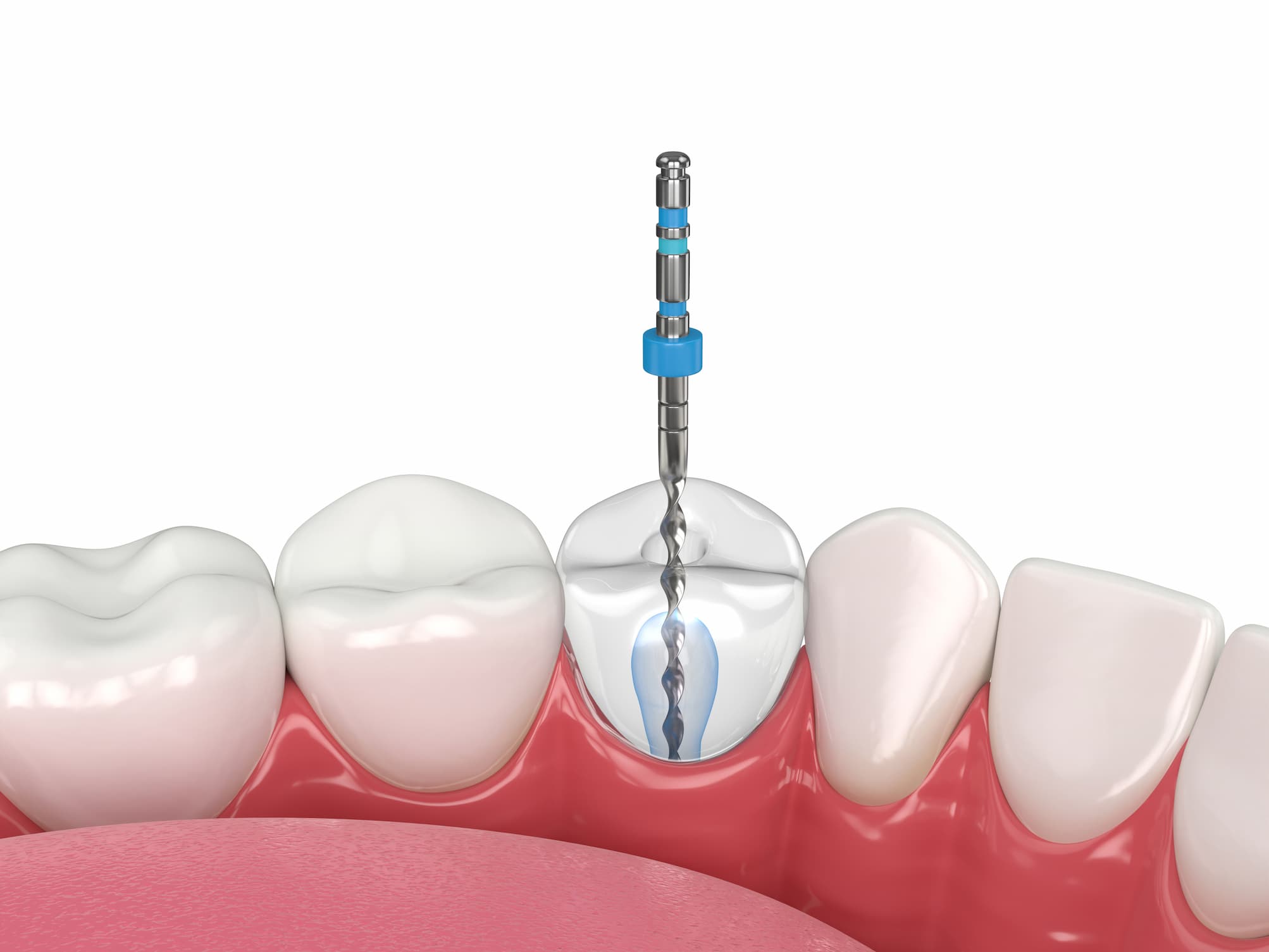
Endodontic Treatment (Root Canal Treatment)
Root canal treatment is necessary when an infection reaches the dental pulp, often as a result of deep decay, cracks in the enamel, or trauma. If left untreated, the infection can cause pain or lead to the formation of an abscess.
The procedure involves removing the infected pulp, disinfecting all the root canals, enlarging the main canal, and then sealing the root canal system. The tooth is then restored—either with a crown filling or by placing a crown—to restore its function and strength.
When is a root canal treatment necessary?
Endodontic treatment may be necessary in the following situations:
- Tooth decay has reached the pulp.
- A restoration performed on a tooth following decay or a fracture comes too close to the nerve.
- The tooth reacts poorly to trauma, leading to irreversible pulpitis.
- The tooth is necrotic.
- A specific restoration requires prior root canal treatment (pre-prosthetic endodontic treatment).

The Importance of Prompt Treatment
It is essential to act quickly when a tooth becomes infected. An infected pulp can cause severe pain, and if left untreated, the infection can develop into an abscess or spread to other parts of the body, putting overall health at risk. If root canal treatment is not performed, extracting the infected tooth remains an option to eliminate the infection and prevent its spread.
Why Keep a Root-Canal-Treated Tooth?
Even after root canal treatment, a tooth continues to perform important functions: it aids in chewing, helps maintain the position of the other teeth, and contributes to the preservation of the jawbone. The presence of teeth stimulates the tissues and muscles of the mouth, thereby strengthening the bone structure that supports them. With age, jawbone density naturally decreases, and this loss accelerates if the teeth are no longer present to provide stimulation.
Is root canal treatment painful?
Contrary to popular belief, root canal treatment is not painful in and of itself. Proper anesthesia is essential, as the procedure can take some time and may sometimes require multiple appointments. The anesthesia techniques used are the same as those used for any other surgical dental procedure.